
Composting in Montgomery County
By: Councilmember Evan Glass, Montgomery County
Note: Today, in honor of National Stop Food Waste Day, we invited Councilmember Evan Glass to provide an update on composting programs in Montgomery County.
Today is National Stop Food Waste Day, a time dedicated to addressing the growing concern of food waste. Shockingly, nearly 147,000 tons of food waste is created annually in Montgomery County. To effectively combat this growing problem, we must expand our composting capacity and reduce our waste stream.
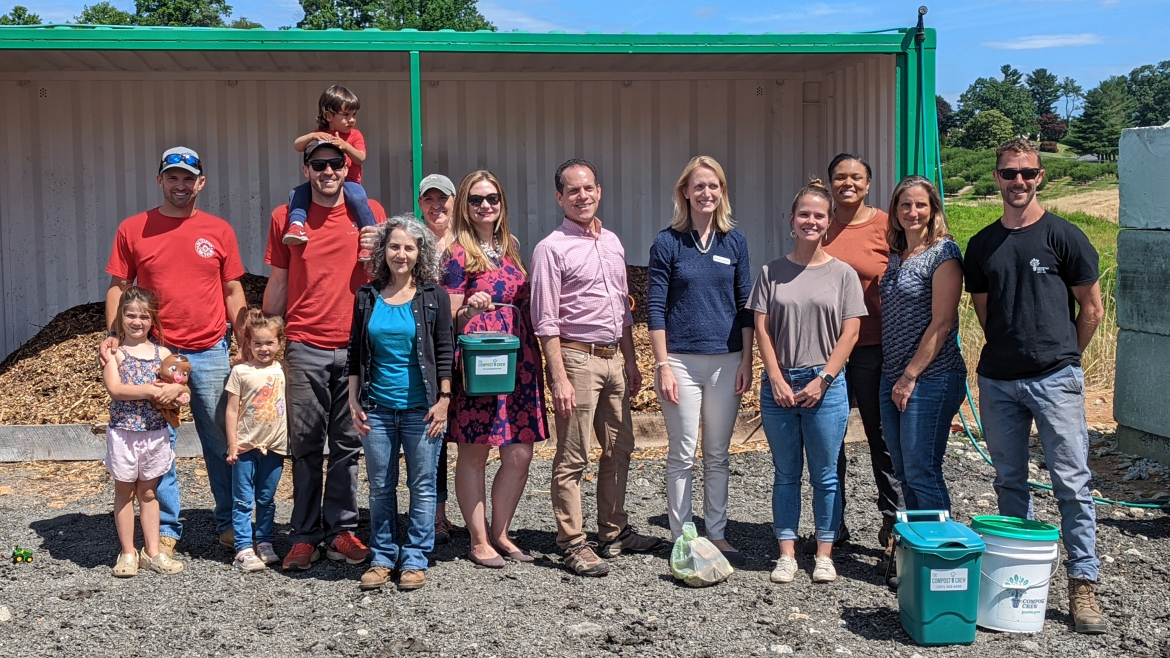
Food waste is everyone’s problem, and composting is a solution everyone can participate in. It’s why I have continued to push for more residential composting programs across Montgomery County. These efforts not only help residents, but it also helps our green economy and food waste entrepreneurs like Compost Crew.
Yet, effective composting relies on more than just individual participation. It requires active government support. That is why I am proud to have been a consistent champion for composting in my capacity as a Montgomery County Councilmember.
Historically, the vast majority of that food waste produced in Montgomery County was burned at the Dickerson incinerator. Instead, I authored a zoning change that allows farms to accept more food waste for their own composting programs.
Montgomery County zoning laws allowed mulching and composting as accessory uses to farming only if no more than 20% of the material was transported from offsite. My amendment increased this limit to 50%, affording our farmers more flexibility. Now, farmers are able to source more food scraps from our community for their composting, removing waste that can be repurposed out of our waste pipeline.
Composting is more than just eliminating food waste. It restores nutrients to our soil, boosting its health. It sequesters carbon in the ground, preserving our environment. Understanding these impacts is critical for the public to support our initiatives in composting. It is why I have stood up as an advocate for increasing educational resources about composting, as that will allow us to transcend some of the barriers that exist between the public and our composting initiatives.
Montgomery County can and will support composting in the future. It will require work, but we can get it done. Whether it’s trying to secure funds to open new composting facilities or working to establish a curbside composting program, I look forward to standing with our farmers and environmentalists in the fight to expand composting across our community.